Quick answer

Is olive wood food-safe? Facts and care for your cutting board

Stand: 15.08.2026

Kurzantwort

Yes. Olive wood is very hard and fine-pored, and is one of the classic woods for kitchen utensils in direct contact with food. To keep it that way, the board needs regular care with food-safe oil, hand-washing instead of the dishwasher, and immediate drying after washing.

Worauf es ankommt

What you should know about olive wood

  1. Material properties of olive wood

    Olive wood is very hard, dense and fine-pored. This tight structure is why the wood is traditionally used for kitchen utensils such as cutting boards and cooking spoons.

  2. No substitute for treatment

    Even dense wood needs regular care with a suitable food-safe oil, so the surface stays sealed and doesn't dry out or crack.

  3. Proper cleaning

    Clean by hand with warm water and a little washing-up liquid, wipe dry immediately afterward, and let it dry upright. No dishwasher and no prolonged soaking in water.

  4. Engraving and material limits

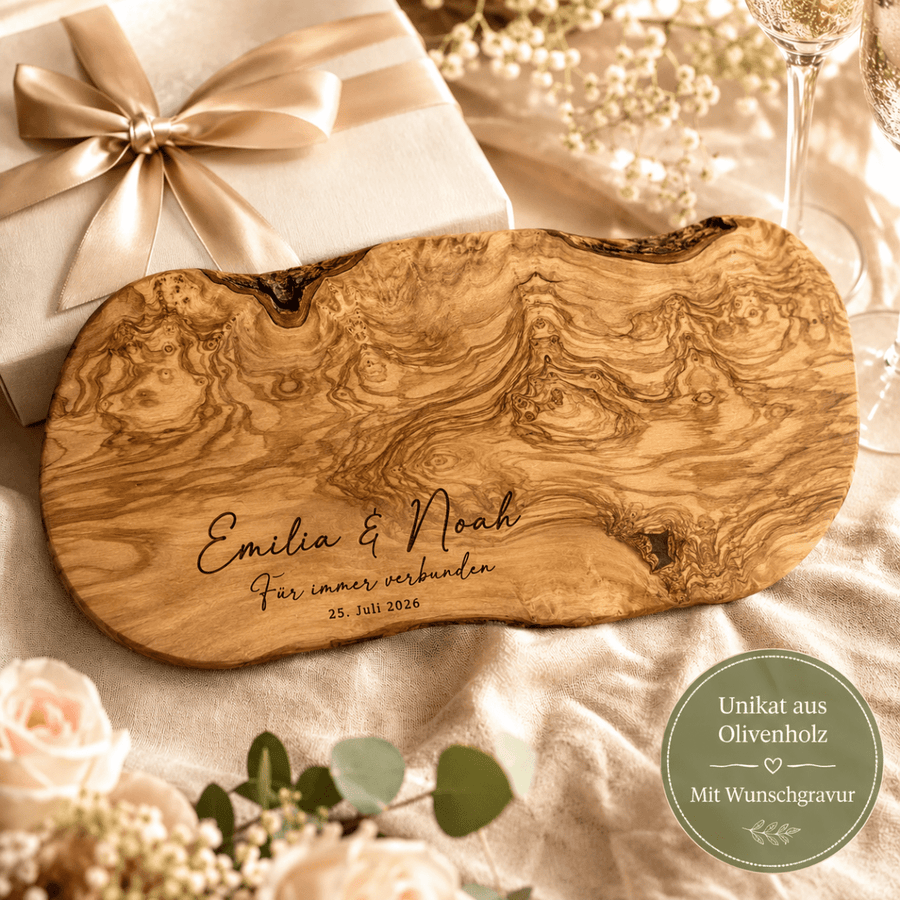
    The laser engraving only changes the surface in the engraved area. The same care applies around the engraving as for the rest of the board.

  5. Lifespan with good care

    With regular oiling and proper cleaning, an olive wood board stays usable for many years and develops its own individual patina over time.

Unsere Empfehlung

Care at a glance

Before first use

Treat the board once with a food-safe wood oil before using it for food the first time. This seals the surface further and protects against liquid penetrating.
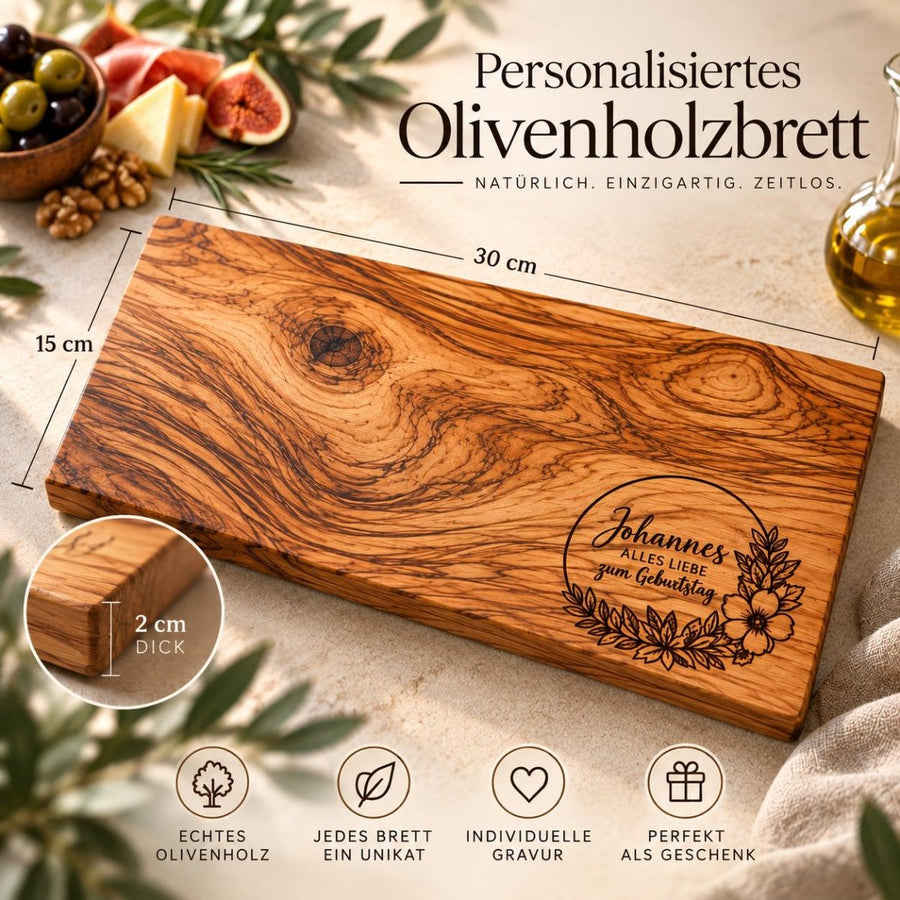
During ongoing use

Re-oil the board every few weeks, depending on how often you use and wash it. If the surface looks dry or dull, that's a good sign a fresh coat of oil is due.

As a gift

A short care note alongside the gift helps the recipient treat the board correctly from the start. We include such notes where possible, or you'll find them here to pass along.

Häufige Fragen

Frequently asked questions about olive wood

Is olive wood safe for direct contact with food?

Yes, olive wood is one of the wood types traditionally and widely used for kitchen utensils in direct contact with food, thanks to its dense, fine-pored structure.

Can I put the olive wood board in the dishwasher?

No. The heat and constant moisture in the dishwasher cause solid wood to swell, crack or warp. Hand-washing and drying immediately is the right way to care for it.

Which oil should I treat the board with?

Use a wood oil explicitly labeled food-safe, for example dedicated cutting board oil or untreated, refined linseed oil from a specialty store. Cooking oils from the kitchen aren't suitable, as they can turn rancid.

Can cracks form in the board?

In cases of severe dryness or lack of care, solid wood can crack. Regular oiling and avoiding direct proximity to heaters or strong sunlight helps prevent this.

Does the engraving change over time?

The engraving stays permanently in the material. As the wood's natural color changes over the years, the contrast may shift slightly, but the engraving itself doesn't disappear.

Weiterlesen

Verwandte Fragen und Seiten